Posts

fish vr | 9 fisher street johnsonville

Image
fish vr | 9 fisher street johnsonville Essential Fish Habitat Necessary Fish Habitat (EFH) was defined by the U. T. Congress in the 1996 amendments to the Magnuson-Stevens Fishery Conservation and Management Act, or Magnuson-Stevens Act, as "those waters and substrate needed to fish for spawning, breeding, feeding or growth to maturity. "|1| Utilizing regulations clarified that waters include all aquatic areas and their physical, chemical, and biological properties; substrate involves the associated biological organizations that make these areas well suited for fish habitats, and the explanation and identification of EFH should include habitats used any time during the species' life cycle.|2| EFH incorporates all types of aquatic habitat, such as wetlands, coral reefs, mud, seagrasses, and rivers.|3|       NOAA Fisheries works with the regional fishery management local authorities to designate EFH making us...
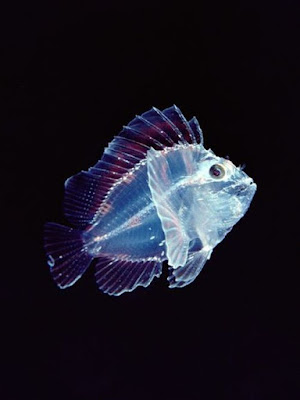
deep sea fish in finding nemo | deep sea fishing battle 2

Image
deep sea fish in finding nemo | deep sea fishing battle 2 Mesopelagic fish   Under the epipelagic zone, conditions transform rapidly. Between 200 metres and about 1000 metres, light continues to fade until there is certainly almost non-e. Temperatures fit through a thermocline to temperatures between 3. 9 °C (39 °F) and six. 8 °C (46 °F). This is the twilight or mesopelagic zone. Pressure continues to boost, at the rate of one ambiance every 10 metres, when nutrient concentrations fall, along with dissolved oxygen as well as the rate at which the water circulates. "|4|       Sonar workers, using the newly developed sonar technology during World War II, were puzzled by what appeared to be an incorrect sea floor 300-500 metre distances deep at day, and fewer deep at night. This developed into due to millions of marine microorganisms, most particularly small mesopelagic fish, with swimbladder...

fish shop thane | fish shop in usa

Image
fish shop thane | fish shop in usa Fish Shop A fish market is a marketplace for selling fish items. It can be dedicated to wholesale job between fishermen and seafood merchants, or to the sale of seafood to individual customers, or to both. Retail seafood markets, a type of wet market, often sell street food as well.       Fish markets line in size from small seafood stalls, such as the one in the photo at the right, towards the great Tsukiji fish industry in Tokyo, turning over about 660, 000 centaines a year.[1]   The term fish market can also refer to the fish marketing in general, but this article is concerned with physical market segments. Seafood markets were known in antiquity.[2] That they served as a public space where large numbers of people may gather and discuss current events and local politics.   Because seafood is quick to spoil,...

k whaley | monsta x whale hunting

Image
k whaley | monsta x whale hunting Whale Whales are descendants of land-dwelling mammals of the artiodactyl purchase (even-toed ungulates). They are linked to the Indohyus, an extinct chevrotain-like ungulate, from which they split approximately 48 , 000, 000 years ago.|19||20| Primitive cetaceans, or archaeocetes, first took to the sea about 49 million years ago and became fully aquatic 5-10 , 000, 000 years later. What becomes an archaeocete is the presence of anatomical features unique to cetaceans, alongside additional primitive features not seen in modern cetaceans, such as visible legs or asymmetrical pearly whites.|21||22||23||9| Their features started to be adapted for living in the marine environment. Major biological changes included their ability to hear set-up that channeled shocks from the jaw to the earbone (Ambulocetus 49 mya), a streamlined body and the growth of flukes on the tail (Protocetus 43 mya), the migration of the no...

whale shark vs | shark and whale encounter 360

Image
whale shark vs | shark and whale encounter 360 Whale Shark   The whale shark (Rhincodon typus) is a slow-moving, filter-feeding floor covering shark and the largest referred to extant fish species. The largest confirmed individual had a duration of 12. 65 m (41. 5 ft) and a weight of about 21. a few t (47, 000 lb).[8] The whale shark holds many documents for size in the canine kingdom, most notably being certainly the largest living nonmammalian vertebrate. It is the sole member of the genus Rhincodon and the just extant member of the family Rhincodontidae which belongs to the subclass Elasmobranchii in the class Chondrichthyes. Before 1984 it was classified as Rhiniodon into Rhinodontidae.       The whale shark is found in open waters of the tropical oceans and it is rarely found in the water beneath 21 °C (70 °F).[2] Modeling implies a lifespan of about 70 years, but measurements pos...

Distribution Whale Shark | whale shark eating plankton

Image
Distribution Whale Shark | whale shark eating plankton Distribution and habitat   The whale shark inhabits all tropical and warm-temperate seas. The fish is largely pelagic, living in the open up sea but not in the better depths of the ocean, though it is known to occasionally dive to depths of as much as 1, 800 metres (5, nine hundred ft).|17| Periodic feeding aggregations occur for several coastal sites including the southern and eastern elements of South Africa; Saint Helena Tropical island in the South Atlantic Marine; Gulf of Tadjoura in Djibouti, Gladden Spit in Belize; Ningaloo Reef in Western Australia; Kerala|18|, Lakshadweep, Gulf of Kutch and Saurashtra coast of Gujarat in India;|19| Útila in Honduras; Southern Leyte; Donsol, Pasacao and Batangas in the Thailand; off Isla Mujeres and Isla Holbox in Yucatan and Bahía de los Ángeles in Baja California, México; Maamigili island, Maldives; Ujung K...

Distribution and habitat | whale shark shark academy

Image
Distribution and habitat | whale shark shark academy Distribution and habitat   The whale shark inhabits all of the tropical and warm-temperate oceans. The fish is mostly pelagic, living in the open sea but not in the better depths of the ocean, even though it is known to occasionally dive to depths of as much as one particular, 800 metres (5, 900 ft).|17| Seasonal feeding aggregations occur for several coastal sites such as the southern and eastern portions of South Africa; Saint Helena Tropical isle in the South Atlantic Water; Gulf of Tadjoura in Djibouti, Gladden Spit in Belize; Ningaloo Reef in Western Australia; Kerala|18|, Lakshadweep, Gulf of Kutch and Saurashtra coast of Gujarat in India;|19| Útila in Honduras; Southern Leyte; Donsol, Pasacao and Batangas in the Thailand; off Isla Mujeres and Isla Holbox in Yucatan and Bahía de los Ángeles in Baja California, México; Maamigili island, Maldives; ...